Lithium-ion batteries store energy by moving lithium ions between the anode and cathode. The term covers several cell chemistries — for stationary energy storage, the two dominant ones are NMC (nickel-manganese-cobalt) and LFP (lithium iron phosphate, LiFePO4).
NMC offers higher energy density and is compact — widely used in EVs and consumer electronics. Its drawback is lower thermal stability: under overcharge, short-circuit or mechanical damage, the cathode can release oxygen at high temperature, accelerating ignition.
LFP has lower energy density but much better thermal and chemical stability. It dominates stationary storage, PV systems and UPS installations where lifespan and safety matter more than weight.
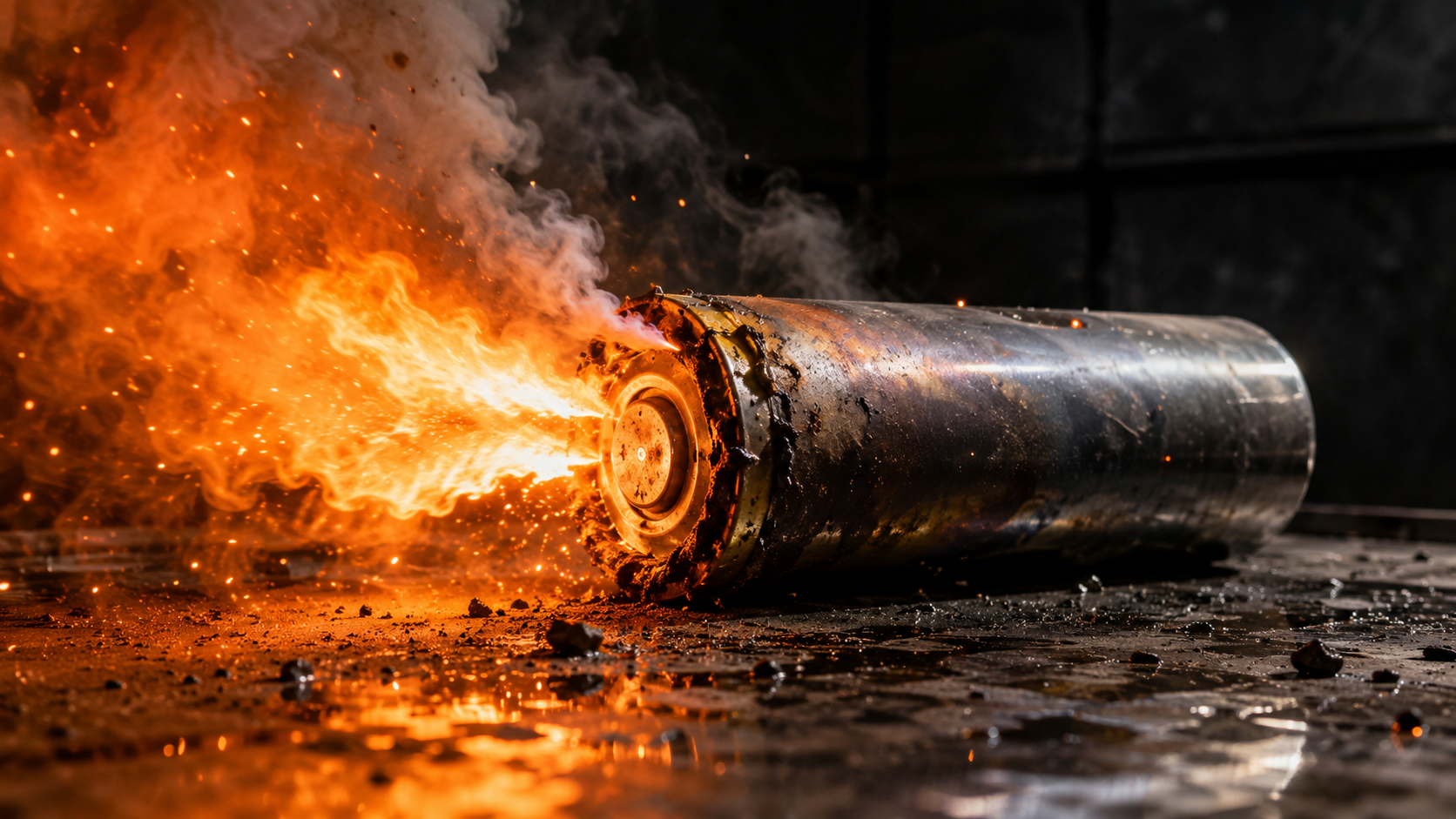
Thermal runaway — a self-sustaining exothermic reaction inside the cell — is the worst-case scenario for any Li-ion chemistry. NMC tends to react more violently; LFP is safer but not immune, and can still vent hot, flammable, toxic gases.
The key conclusion: battery safety does not depend on the chemistry name alone. The whole system matters — BMS, electrical protection, thermal separation, gas detection and a protective enclosure that contains the consequences of a failure.