1. Incident
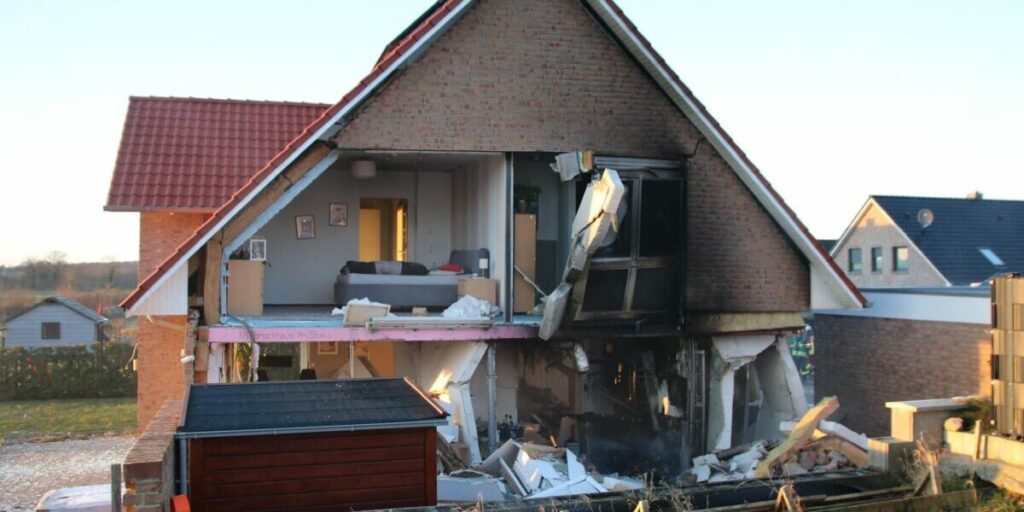
On 15 August 2025, fire brigades from Złotoryja (Lower Silesia, Poland) were dispatched to a fire of a residential battery energy storage system (BESS) installed next to a single-family house in the village of Kozów. The unit was a DIY build, housed in a wooden enclosure, based on LiFePO₄ (lithium iron phosphate) prismatic cells, coupled to the home PV system via a hybrid inverter.
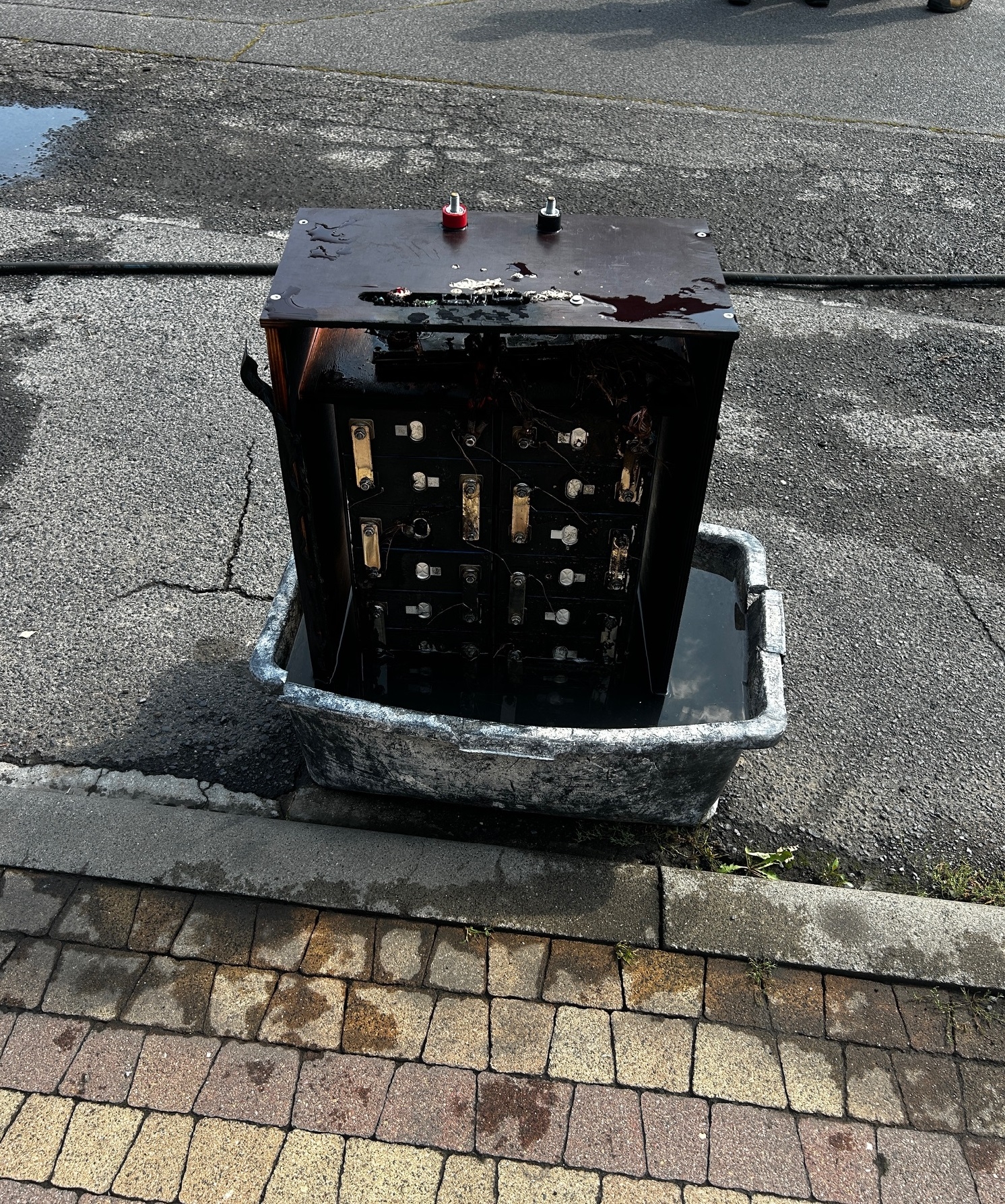
Following current best practice for Li-ion fires, after isolating the battery from the installation, the firefighters removed the pack outdoors and applied prolonged water cooling. The goal of such tactics — aligned with NFPA 855 — is not flame suppression but stopping thermal runaway propagation to neighbouring cells.
*Source of factual information and photographs: Polish industry portal elektrykapradnietyka.com (August 2025), photos by OSP Prusice and JRG Złotoryja.*
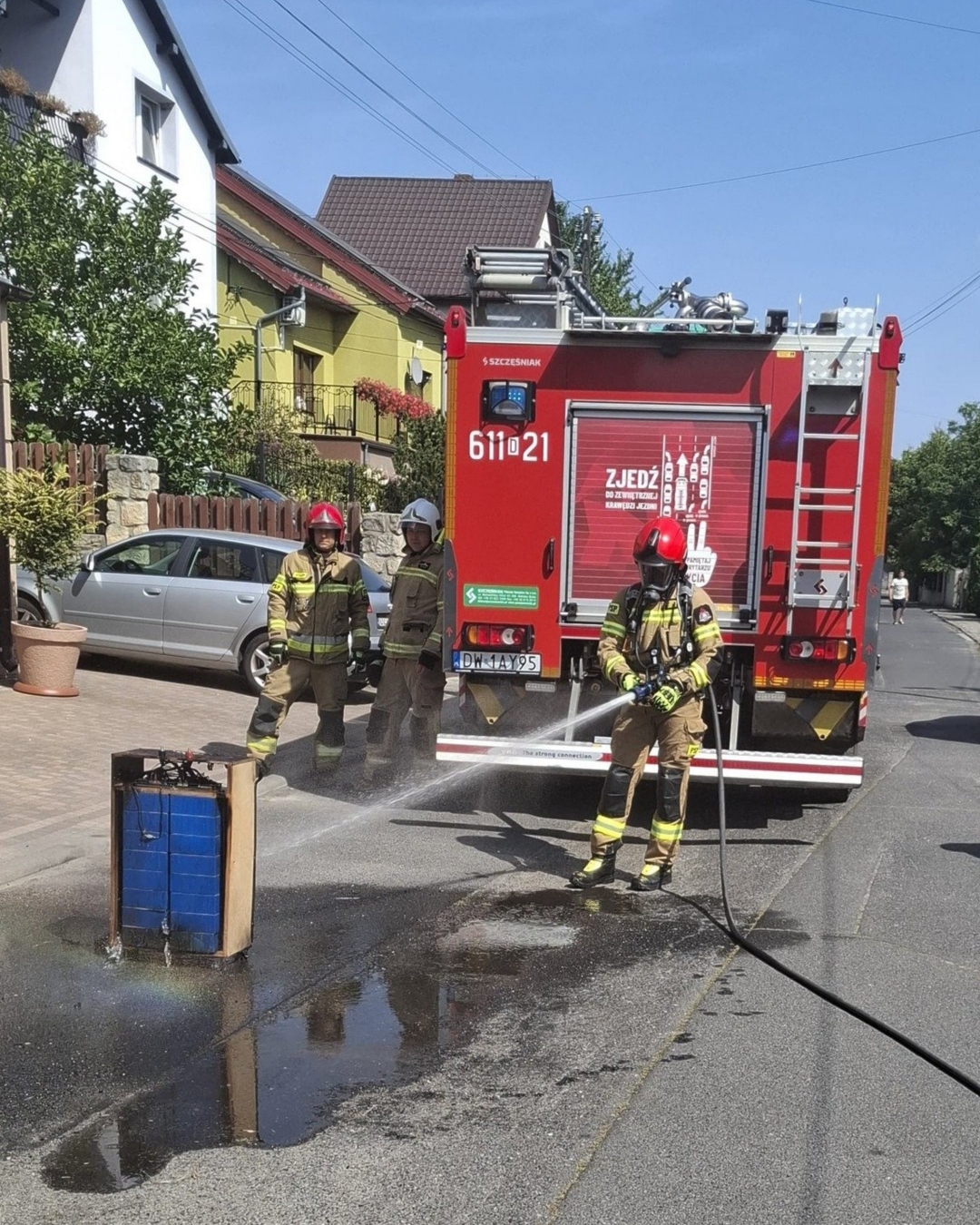
2. As-built configuration
According to the owner/installer's own statement, the pack used Hithium LiFePO₄ prismatic cells (2023 production), arranged horizontally, in a wooden enclosure with a PMMA (Plexiglas) front cover, paired with a Growatt WIT hybrid inverter. The initiation reportedly occurred at cell #8 — the pressure vent activated, cell #14 leaked liquid electrolyte, which ignited as a jet flame, burned through the PMMA cover and propagated to the enclosure, inverter and switchboard.
3. Technical failure analysis
3.1. Single-cell initiation
LiFePO₄ is among the safest commercial Li-ion chemistries — its thermal runaway onset is typically 200–250 °C vs. 150–170 °C for NMC (Feng et al., *Energy Storage Materials*, 2018; Sandia, 2020–2023). It is not, however, non-flammable. Plausible initiation paths include internal short circuits from manufacturing defects (dendrites, metallic contamination, separator damage), corrosion-driven local heating, cell imbalance leading to chronic over-charging of a single cell, or mechanical damage.
3.2. Vent activation and gas release
Prismatic LFP cells include a pressure-relief vent. Upon activation, the released vent gas is a flammable, partially toxic mixture (Bugryniec et al., 2019; Sandia SAND2018-12831) of H₂ (25–40 vol%), CO (10–25 vol%), CO₂, light hydrocarbons (CH₄, C₂H₄, …) and electrolyte solvent vapours (DMC, EMC, EC). Solvent flash points are 18–33 °C, which explains the "blow-torch flame" observed — a textbook jet fire of ignited vent gas and vapourised electrolyte.
3.3. Propagation
A 600–800 °C jet impinging on a PMMA cover (ignition temp. ~280 °C, EN 13501-1 reaction-to-fire class E) ignites it almost instantly. The burning PMMA then provides the heat to (i) drive cascading runaway in neighbouring cells, (ii) ignite the wooden enclosure (class D-s2,d0 for solid wood, worse for unsealed plywood), and (iii) propagate to the inverter and switchgear.
4. Critical design errors
- Combustible enclosure (wood + PMMA). IEC 62619 and UL 9540/9540A require an enclosure of defined fire performance; current good practice is A1/A2-s1,d0 reaction to fire internally and EI30–EI60 separating wall to occupied spaces.
- Horizontal cell orientation — once the vent opens, liquid electrolyte drains by gravity, multiplying the available fuel. Most LFP cell manufacturers (CATL, EVE, Hithium) specify vertical, vent-up orientation.
- No gas management — no vent ducting to the outside, no H₂/CO detection.
- No physical separation of power electronics from the battery — the first fire destroys the protection and communication layer.
5. Lessons for BESS designers
LiFePO₄ has a meaningfully higher safety margin than NMC, but the Kozów event shows it does not absolve the designer of BESS construction discipline. A fire occurred despite the safest available chemistry, because the enclosure and surroundings were not matched to the single-cell failure mode.
6. Role of the protective enclosure
The design objective should be inverted from the colloquial "prevent a fire" to: assume a single cell will fail — the enclosure must contain the consequences, limiting the fire to the pack and giving emergency services and occupants time. This is delivered by non-combustible, thermally insulated enclosures with controlled vent paths and EI-rated separating walls — passive barriers independent of sensors or active suppression, which during a fire fail first.
---
Selected references: Feng et al., *Energy Storage Materials* 2018; Bugryniec et al., *J. Power Sources* 2019; Sandia SAND2018-12831 and updates 2020–2023; NFPA 855:2023; IEC 62619:2022; UL 9540A:2019; EN 13501-1:2018.