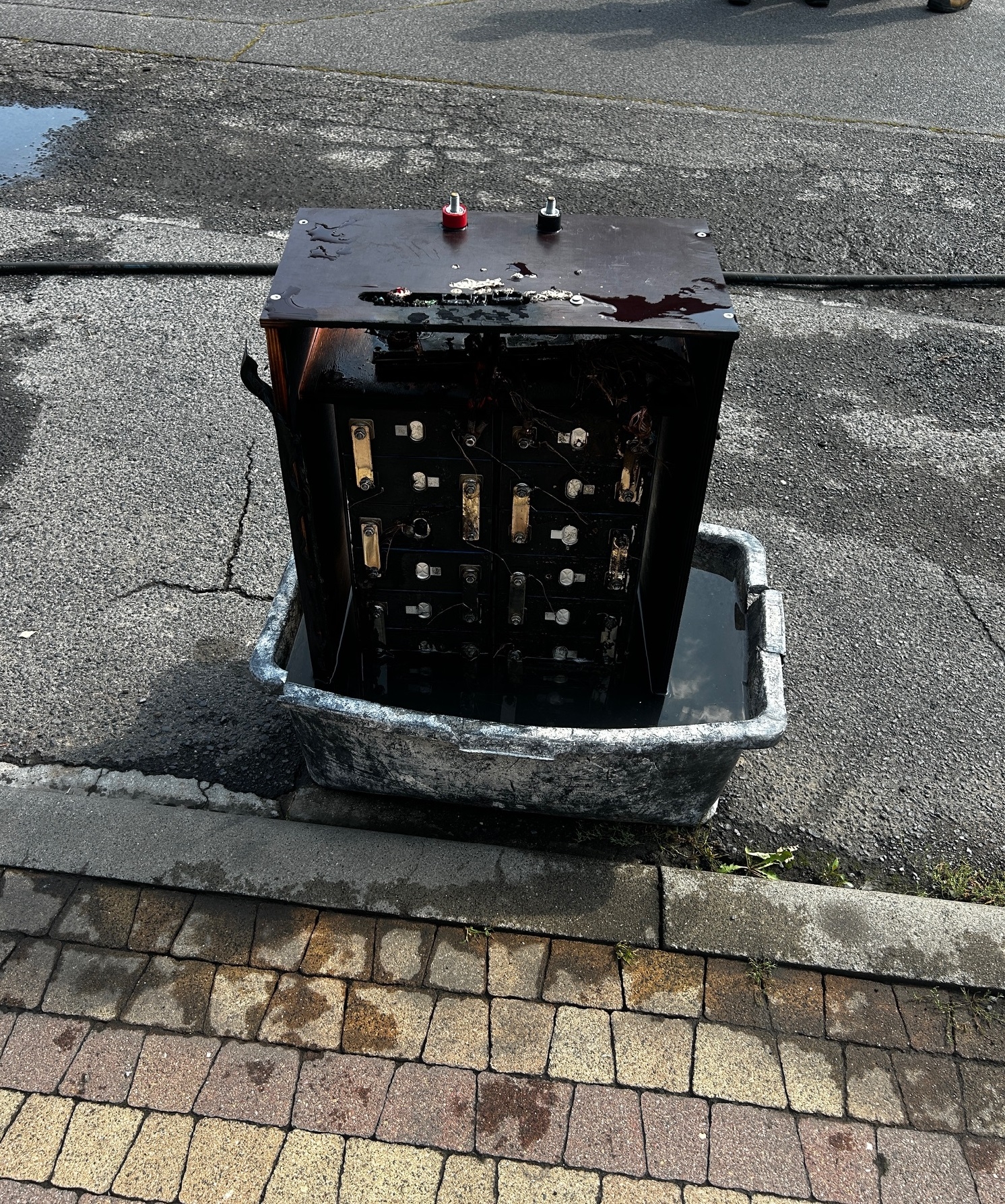
Most fire incidents with Li-ion batteries — drills, power tools, e-bikes, e-scooters — happen during charging or shortly after. That is when the cell is under the heaviest electrochemical load, and any internal defect, aggressive charger or mechanical damage can trigger a reaction that cannot be reversed.
In service centers, workshops, installation companies and rental fleets, multiple battery packs are charged in parallel every day — often after hours, without supervision. A plastic container, a wooden shelf or an ordinary workbench is not designed for this kind of risk.
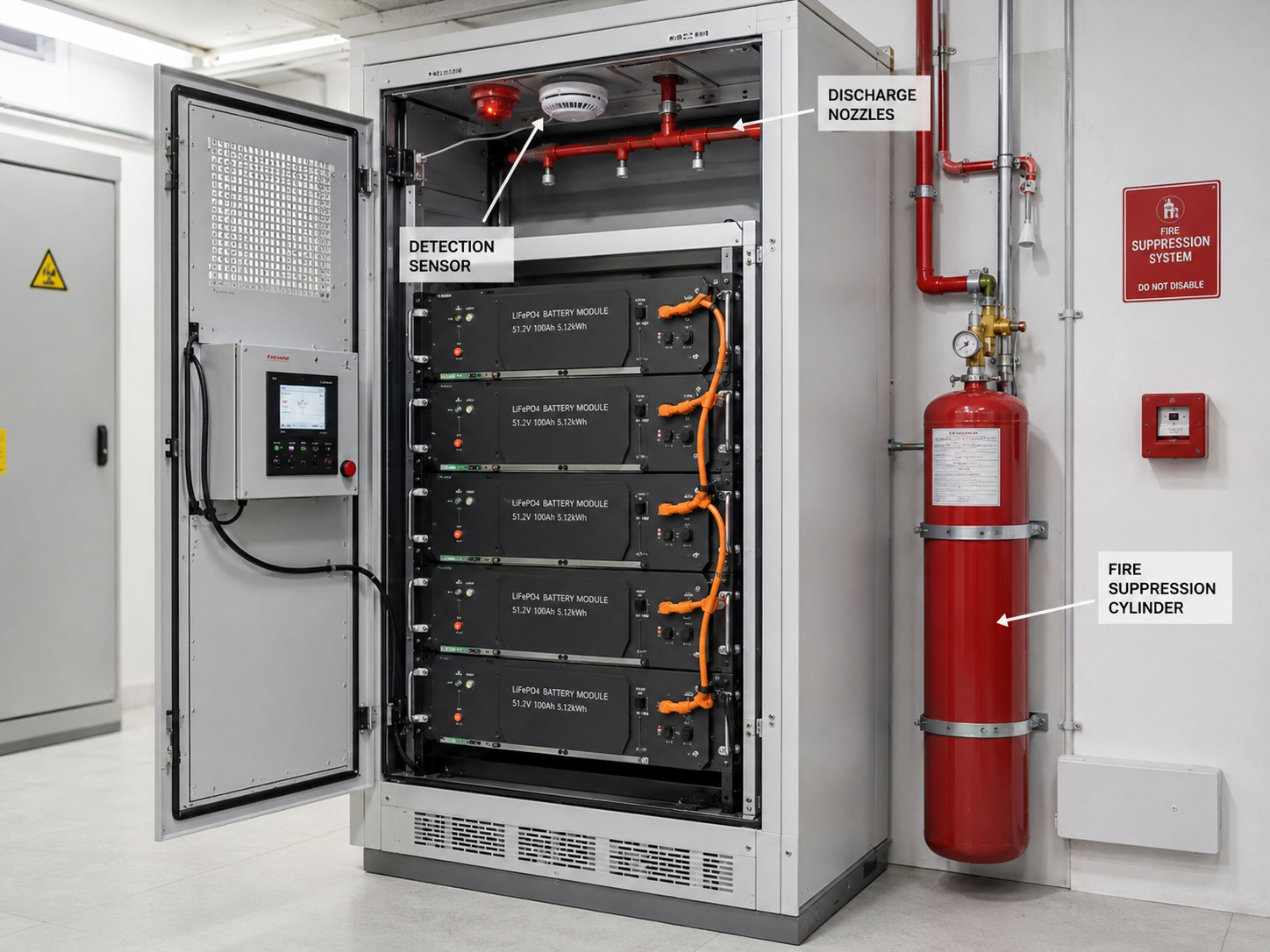
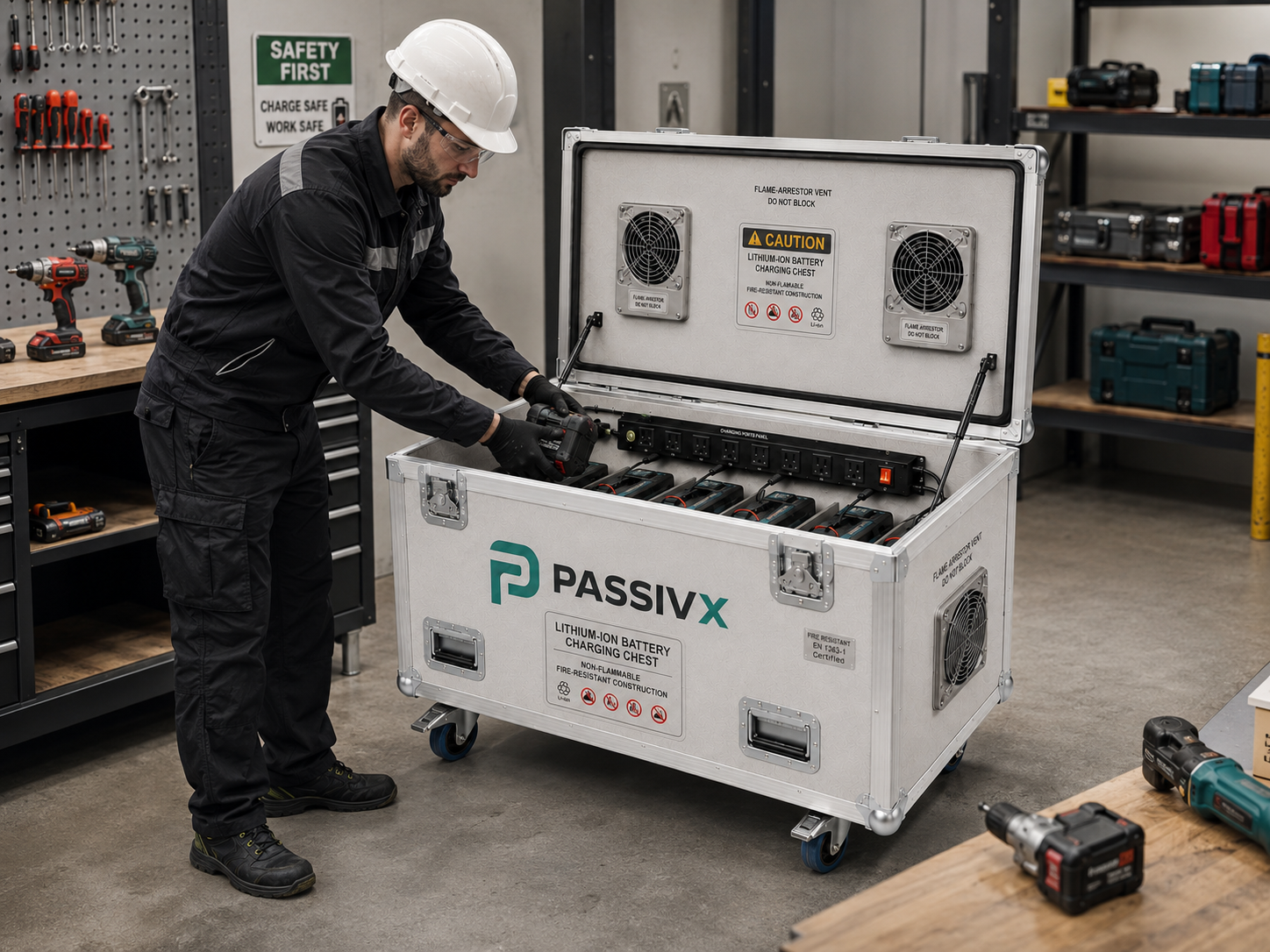
A dedicated non-combustible charging chest such as PassivX BOX combines cement-bonded particle board panels, internal compartments, a power rail for multi-station charging, controlled venting (optionally with a flame arrestor) and side ventilation. PRO versions add temperature, smoke and VOC sensors, alarm signaling and optional active ventilation. It does not extinguish a battery fire, but it limits the consequences of a failure and separates the charging process from the surroundings.
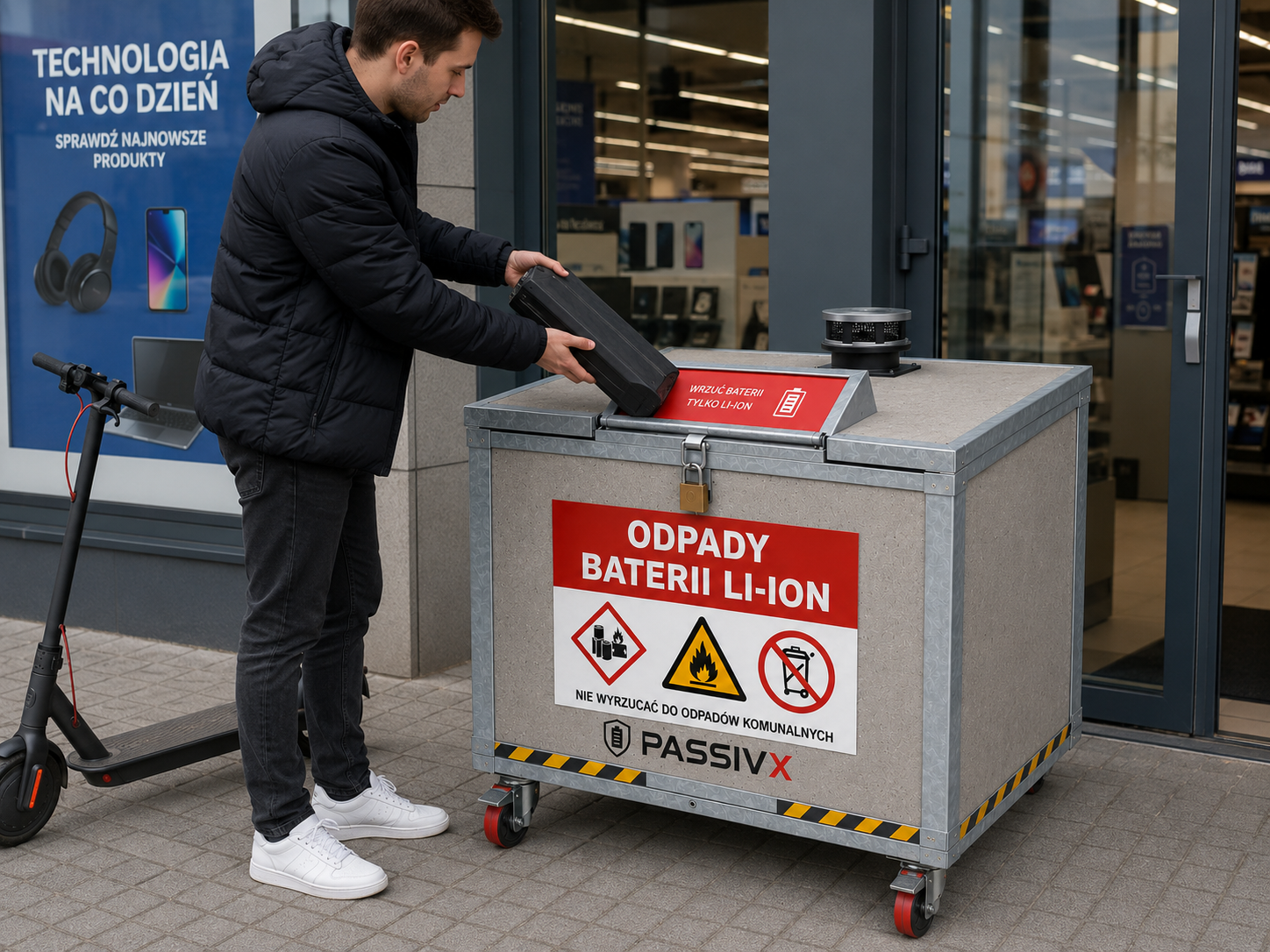
For collection and storage of used or damaged batteries, the right product is PassivX BIN. For supervised charging of working batteries: PassivX BOX.