If you've recently searched for information about home energy storage, you've probably encountered the reassuring statement: "LiFePO4 batteries are non-flammable." Sellers, some installers, and even manufacturer marketing repeat this. The problem is that this claim is a half-truth — and in the world of safety, half-truths can be more dangerous than lies.
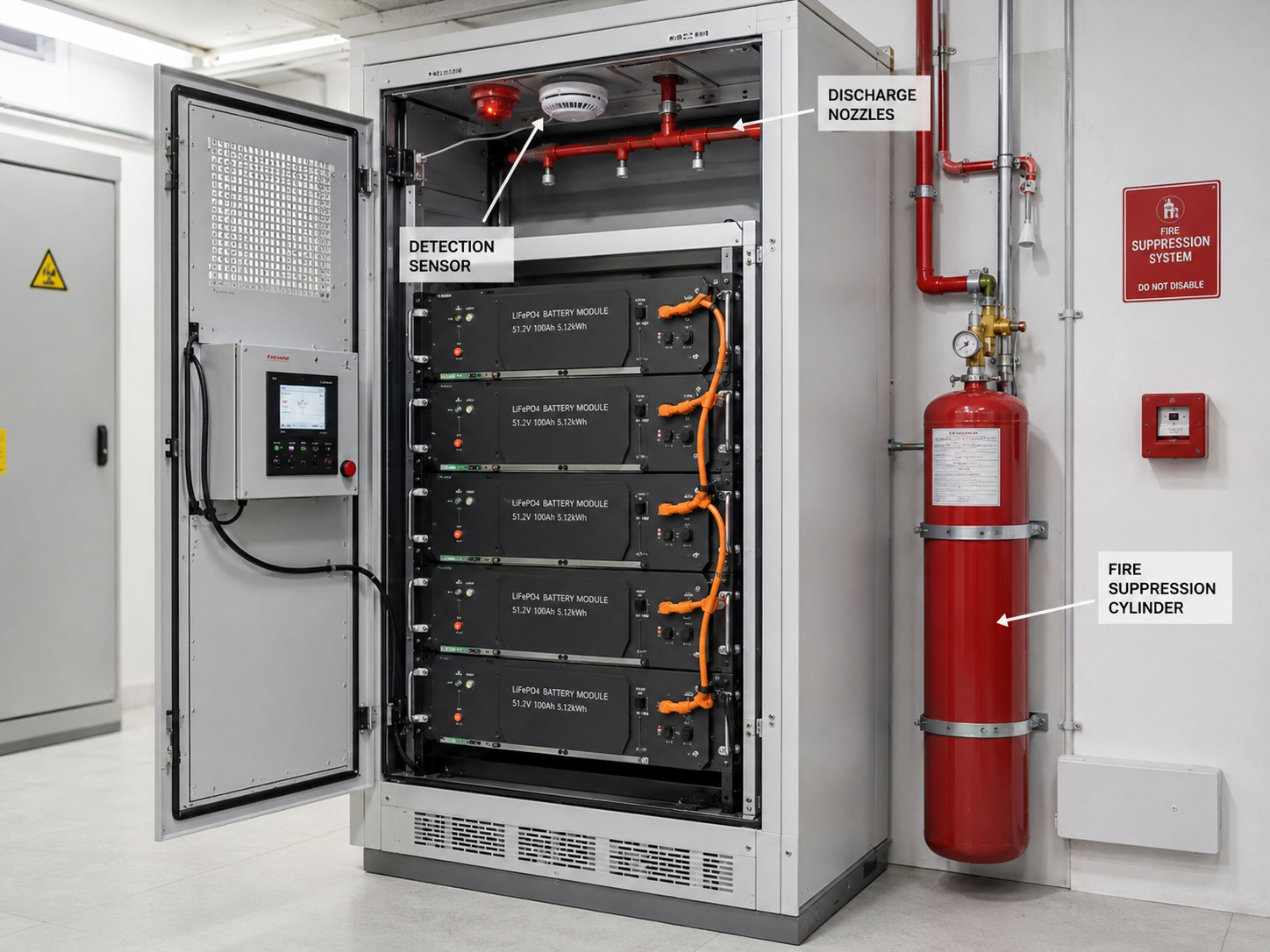
The good news is that LFP is indeed significantly safer than other lithium chemistries. The bad news: it's still a lithium battery with chemical properties that under certain conditions can lead to fire, gas explosion, and toxic emissions. The fact that all major industrial storage manufacturers install active fire suppression in their LFP systems tells you what the industry really thinks.
LFP really is safer — the facts
Higher thermal runaway threshold — LFP enters runaway at approximately 270–300°C vs. 150–210°C for NMC. This 60–120°C difference provides a significantly larger safety margin.
Does not release oxygen — LFP's phosphate-iron cathode has very strong P–O bonds. Even during thermal decomposition, oxygen remains bound in the structure, unlike NMC where the cathode releases free oxygen feeding the fire from within.
Slower reaction dynamics — Nail penetration test temperature rise rates: NMC ~200°C/min vs. LFP ~1.5°C/min. With LFP you have minutes to react; with NMC, seconds.
Mechanical resistance — NMC cells ignite almost immediately on puncture. LFP cells often don't ignite at all — they vent hot gas but without flame.
Limits of LFP safety — what research shows
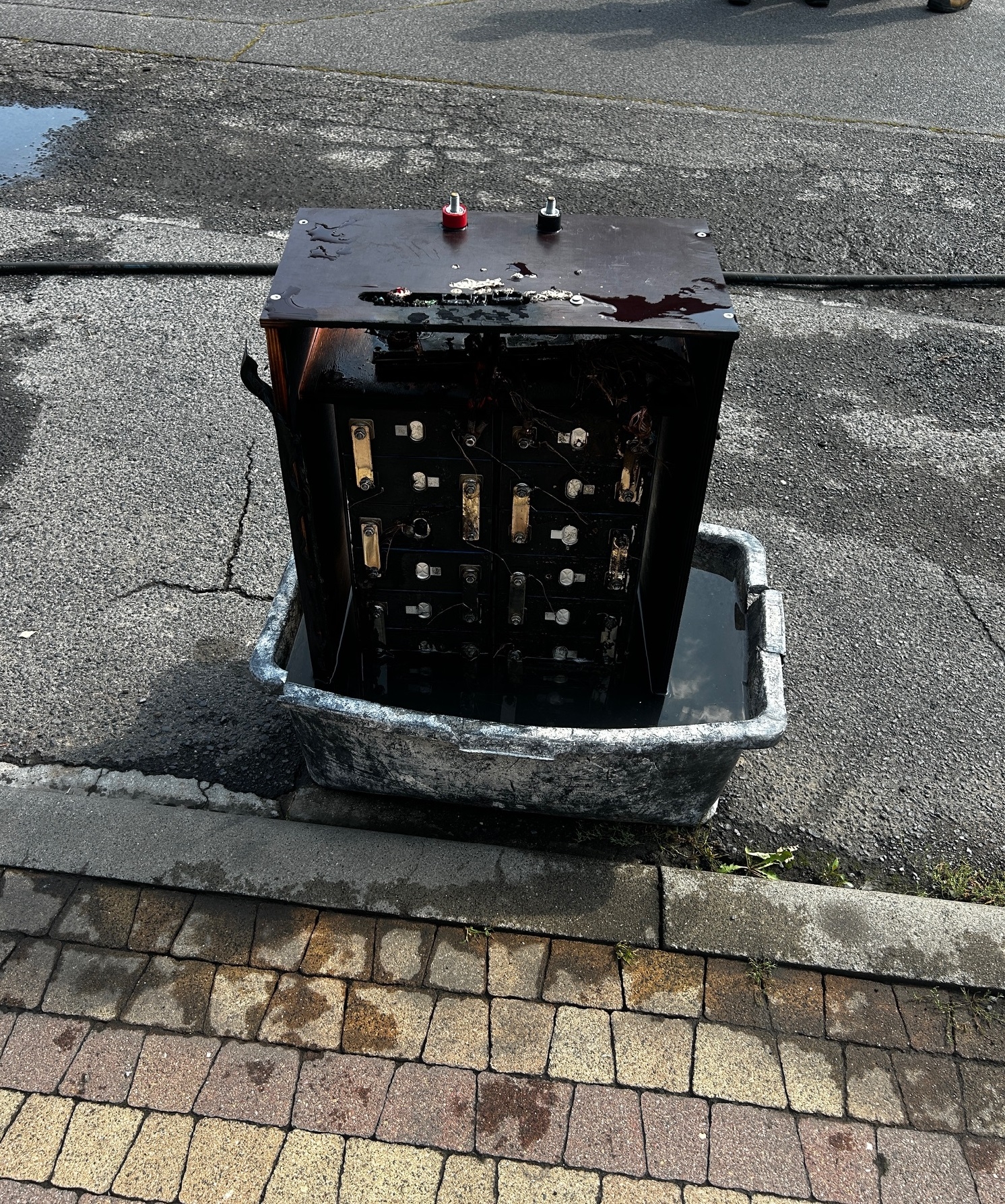
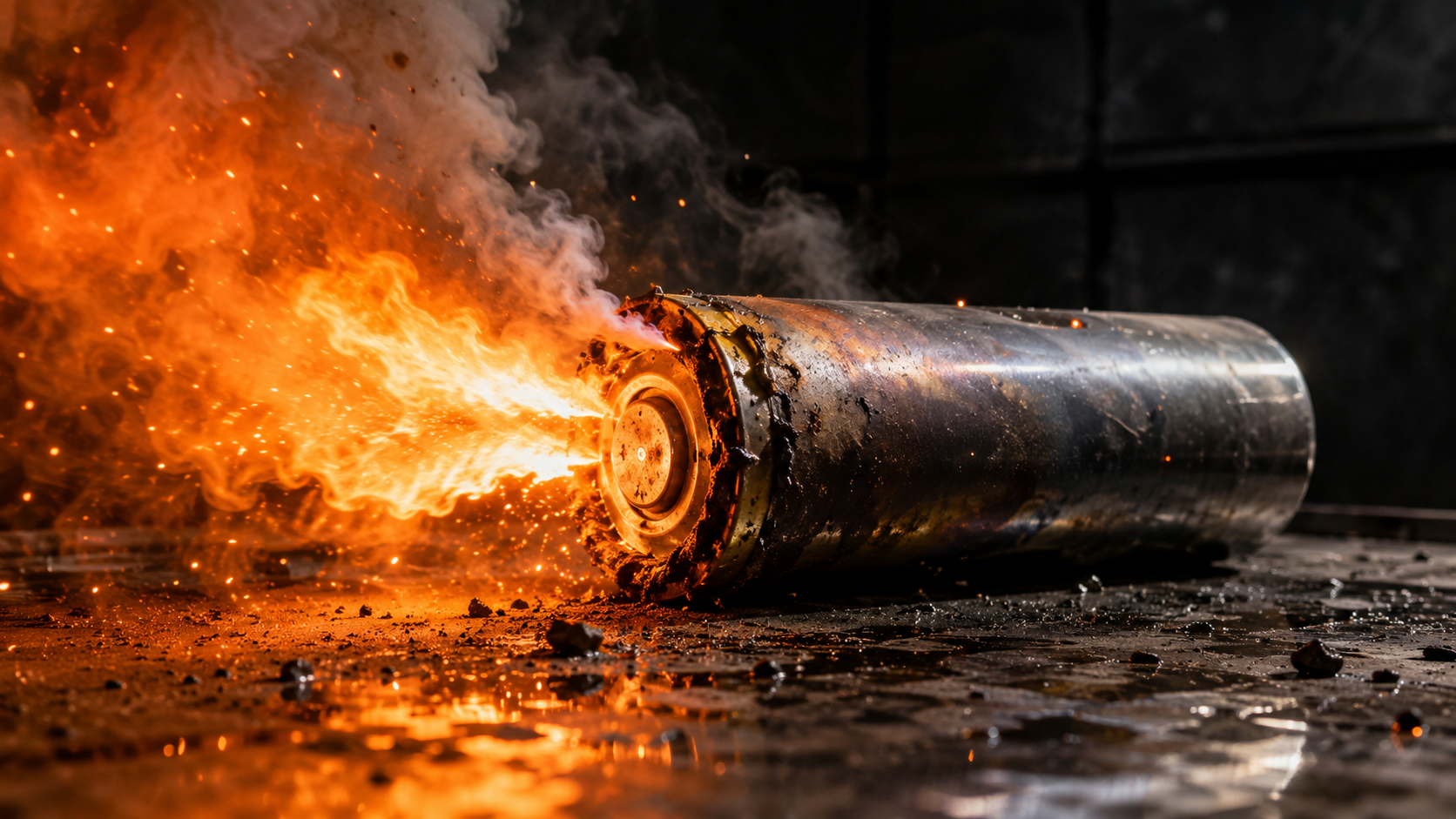
1. Thermal runaway in LFP is possible. Three conditions can trigger it: thermal abuse, mechanical abuse, and electrical abuse (including manufacturing defects).
2. LFP produces more flammable gases than NMC. Research (ACS Omega, 2024) shows LFP releases significant hydrogen (H₂), carbon monoxide (CO), hydrocarbons, and deadly hydrogen fluoride (HF).
3. Gas explosion risk is fundamental. In enclosed spaces, these gases can reach explosive concentrations before any visible fire occurs. Gas explosions — not fires — were the main mechanism in serious LFP storage incidents.
4. Thermal propagation between cells. Even "gentle" runaway in one cell emits 400–600°C heat sufficient to trigger adjacent cells. The UL 9540A test evaluates propagation at three levels: cell → module → unit.
5. Reignition. Even after successful external fire suppression, damaged cells can re-enter thermal runaway hours or days later. Fire services monitor such incidents for 48–72 hours.
Why the entire industry installs fire suppression in LFP batteries
- Tesla Megapack (LFP) — gas detection, heat detection, automatic water suppression
- CATL EnerC (LFP) — multi-stage detection, inert gas + aerosol
- BYD Cube (LFP) — perfluorobutane suppression system
- Sungrow PowerTitan (LFP) — similar safety package
- Huawei FusionSolar LUNA S1 (LFP) — detection, suppression, separate module enclosures
Aerosols in home storage
Leading home storage manufacturers now integrate pyrotechnic fire capsules: BYD Battery-Box Premium, Pylontech Force, Huawei LUNA2000, Sungrow SBR. At 10–20+ kWh capacity, thermal runaway even in LFP is a real building risk.
What this means for homeowners
> Narrative 1 — marketing: "LFP is non-flammable, no worries."
> Narrative 2 — sensational: "All lithium batteries are time bombs."
Both are wrong. The truth: LFP is the safest available chemistry but is not non-flammable. Three practical safety layers that work:
1. Chemical layer — LFP chemistry (baseline) 2. Electronic layer — quality BMS with multi-point monitoring 3. Physical layer — non-combustible enclosure (A2-s1,d0), outdoor placement 3+ m from building, controlled ventilation, thermal separation
Summary — safety is a system, not a slogan
The myth "LiFePO4 is non-flammable" is harmful because it leads to complacency. Full protection means three layers: chemistry + electronics + physics (enclosure, location, separation). A well-designed installation limits consequences to the battery itself, even when all electronic safeguards fail.
*Based on peer-reviewed publications (ACS Omega, Journal of Power Sources), current safety standards (UL 9540A:2025, NFPA 855, IEC 62619), and public industry incident reports.*